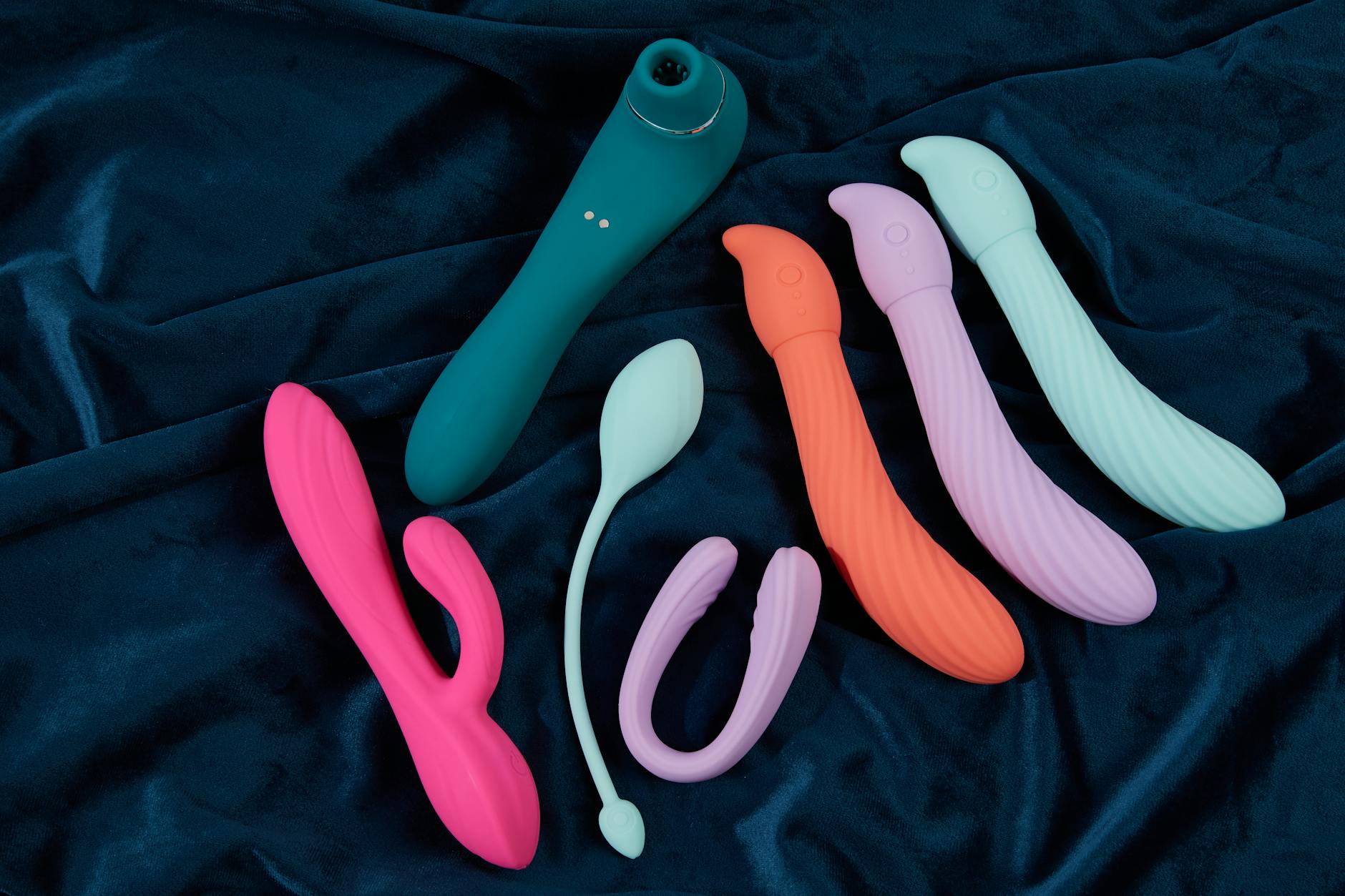
Depression changes how pleasure works. Your toys shouldn't punish you for that.
Here's what nobody tells you: when depression lifts your sensation like a heavy blanket, going back to your old vibrator feels like sticking your hand into a static field. Nothing lands. Or worse, everything lands too hard.
I work with people in this space all the time. The guilt is almost universal. You get better. You want intimacy again. You pull out the toy that used to feel amazing, and it's like touching someone else's body. That disconnect is real, and it's not because you're broken.
What depression actually does to sensation
Depression isn't sadness. It's anhedonia, which is the brain's failure to register reward. Sex, food, sunlight, a favorite song. The dopamine pathway that flags something as pleasurable gets muted. Physically, depression also flattens arousal. Blood flow responds slower. Tissue sensitivity dulls. Your nervous system is running in survival mode, not pleasure mode.
When you're on medication (SSRIs especially), sensation can flatten even more. That's real too, and worth mentioning to your prescriber.
But here's what matters: these changes are temporary. Your body remembers pleasure. Your brain does too. You're not starting from zero. You're starting from a lower baseline, which is a completely different thing.
Why traditional vibrators feel wrong during recovery
Most vibrators in wide circulation are designed for someone whose nervous system is already turned on. They're loud, they're intense, they require you to meet them halfway. When you're rebuilding sensitivity, that's like being asked to run a marathon before you can walk.
A traditional vibrator also delivers vibration in one narrow frequency. You get intensity or you get nothing. There's no middle ground, no gentleness option that still feels like something.
People often tell me they try their old toys and feel worse afterward. Not physically. Emotionally. It reinforces the narrative that their body's broken. It's not. The tool just doesn't fit right now.
How lemon sucker technology actually helps rewire pleasure
A lemon vibrator like the Lem works differently. Instead of vibration, it uses rhythmic air-suction patterns. That matters for three reasons.
First, it doesn't demand intensity to register. You can run the Lem at pattern one, and you'll feel something real. You won't feel nothing. That matters when your nervous system is in recovery mode. You get immediate feedback that your body is responding. That feedback loop is what starts rewiring pleasure pathways.
Second, it stimulates nerve clusters without numbing them. Vibration creates a desensitizing effect over time, especially at high intensity. Air-suction creates a different kind of stimulation. It's rhythmic, pulsing, and it works with your body's natural sensitivity curve instead of against it.
Third, the sensation is novel. When depression has made everything feel muted, novelty itself is restorative. Your brain pays attention. Neural pathways light up in a different way. That's not pleasure yet. But it's the beginning of pleasure waking back up.
The practical rebuild timeline
I usually work with people on a three to four week arc when they're rebuilding after depression.
Week one. Use the lemon clitoral vibrator for five to ten minutes, patterns one through three only. Your job isn't to orgasm. It's to feel something and prove to yourself that your body can respond. Most people find this genuinely calming.
Week two. Extend to fifteen minutes. Mix in some of the higher patterns if you want to. Start to notice what patterns feel good versus which ones feel like work. There's a difference, and your body knows it.
Week three. By now, most people report that sensation is returning. Not all the way. But noticeably. Arousal takes less time to build. Orgasms feel more like orgasms and less like check marks on a to-do list.
Week four and beyond. You'll probably find that you want to experiment more. Try combining lemon vibrator stimulation with partner touch. Try different settings during different times of day. Your pleasure architecture is being rebuilt. It needs time, but it also needs exploration.
Rebuilding with a partner requires a separate conversation
If you have a partner, here's the thing I always say: depression's impact on your sex life is not your partner's problem to fix. It's also not your fault. It's a system problem.
Don't let your partner push you back toward what "used to work." Don't let them make this about missing how things were. What helps is someone saying, "Your body's learning again. That's actually kind of beautiful. Let's figure out what feels good now." That's a radically different conversation.
The lemon vibrator is useful in that context because it's low-pressure. It doesn't look like the old toys. It doesn't carry the same weight of expectation. It's also genuinely effective at lower intensities, which means your partner can watch you rediscover sensation without feeling like they're doing something wrong or you're faking your response.
The role of patience (and why it's not spiritual bullshit)
I'm not going to tell you that healing is a journey or that pleasure is your birthright or any of that. Here's what I will tell you: your brain is rewiring. Neuroplasticity is real. It takes about three to four weeks of consistent gentle stimulation for new neural pathways to start forming.
That's not poetry. That's neuroscience. Which means patience isn't virtue signaling. It's logistics. Your brain needs time to remember that pleasure is possible. A lemon vibrator compresses that timeline because it works with your current sensitivity level instead of against it.
When to check in with someone
If you're rebuilding after depression and sensation is still completely flat after four weeks of gentle daily use, mention it to your doctor. It might be medication. It might be that depression's holding on tighter than you thought. It might be something else entirely.
If using any vibrator makes you feel worse emotionally afterward, that's also worth discussing with a therapist. Sometimes the shame around pleasure takes longer to untangle than the neurochemistry.
But honestly? Most people find that a lemon clitoral vibrator, used gently and consistently, unlocks sensation faster than they expected. Your body wants to feel good again. Sometimes it just needs the right tool to remember how.
Frequently asked questions
How long after starting antidepressants can I expect sensation to return?
It depends on the medication and your brain chemistry. SSRIs especially can flatten sensation for months. Some people find that the first few weeks are the worst, and things improve gradually. Others stay numb until their body adjusts or their dose changes. If numbness persists after two months, your prescriber should know. Switching medications or adjusting dosage can help, though there's no magic answer. A lemon vibrator isn't a replacement for that conversation, but it can help you notice the small increments of change as they happen.
Can a lemon vibrator make depression feel worse?
Not if you use it correctly. The risk is psychological, not physical. If you're using it as a performance test ("Am I normal yet?") instead of as a tool, it can feel discouraging. But if you're using it to reconnect with sensation gradually, most people find it genuinely comforting. Think of it like physical therapy for pleasure. It shouldn't hurt. If it does, stop.
Should I tell my partner I'm using a lemon vibrator during recovery?
That depends on your relationship. If you're rebuilding intimacy together, transparency helps. If your partner is supportive, they might want to be part of the process. If your partner has their own stuff going on, solo exploration with a lemon vibrator might be the right first step. There's no wrong answer. The important thing is that you're rebuilding pleasure for you, not performing it for anyone else.
Can I use a lemon clitoral vibrator if I'm still on depression medication?
Absolutely. In fact, you probably should. A lemon vibrator is particularly helpful when sensation is dampened by medication because it doesn't require you to meet it halfway. You can feel something real even at the lowest settings. That matters when your nervous system is running slow.
What if I've never been able to orgasm, and depression made it worse?
Anhedonia on top of pre-existing difficulty reaching orgasm makes the mountain steeper, not impossible. A lemon vibrator is genuinely useful here because it provides consistent, rhythmic stimulation without the pressure of traditional vibrators. Many people find that the reduced intensity actually helps them relax enough to explore what sensation actually feels like without the goal of orgasm constantly in the background.
How is rebuilding pleasure different from just pushing through?
Pushing through is what got you numb in the first place. Rebuilding is about meeting your nervous system where it is and working upward slowly. A lemon vibrator, used gently, is rebuilding. Gritting your teeth and using your old vibrator at full intensity is pushing through. One helps. One hurts.
You're not behind. You're just starting from here.
Depression steals a lot. Pleasure, desire, the ability to feel good in your own body. Rebuilding those things takes time, the right tools, and patience that actually means something.
A lemon vibrator isn't magic. But it does something really useful: it meets you where you are right now, with sensation that's real even at low intensity, and it doesn't carry the weight of expectation that your old toys do. That matters more than you might think. Your body's learning again. Give it time. Give it gentleness. Give it the right tool for the job.
If you have questions about rebuilding pleasure after depression, or you want to talk through what might work for your specific situation, you can always reach out to Hello Nancy. We're here to help.