Let's name the thing nobody talks about
Sex stops. For months. Sometimes years. It happens after kids arrive, after one partner's depression deepens, after illness or surgery, after a breach of trust that needs rebuilding, after one partner lost interest and the other gave up asking. Then one day someone says, "Maybe we should try again." And suddenly both of you are panicked because the body forgets, the mind remembers every reason it went away, and everything feels weird.
This is not a failure. It's a gap. And gaps are fixable.
Why the gap happened matters less than what happens next
I work with couples carrying these gaps regularly. The presenting issue is usually something else. She's angry. He's anxious. They're "just not in sync." But the real problem is that sexual connection has gone quiet, and neither person knows how to break the silence.
Here's what I've learned: the gap itself isn't the problem. The problem is that you're trying to jump back into what you had before, using the same approach, expecting different results. Your body is different now. Your nervous system is different. The trust is different. So the entry point has to be different too.
Clitoral suction toys like the lemon vibrator are particularly useful here because they shift the dynamics in a few specific ways. They're not vibration (which can feel aggressive after a pause). They're not penetration (which carries emotional weight). They're novelty without pressure. You're not "getting back to normal." You're trying something new together.
The conversation before the toy
This is the part that actually matters. Do not skip it.
Sit down separately first. Ask yourself honestly: What am I afraid will happen if we start again? Is it that she'll be disappointed? That I'll lose erection? That we'll realize we don't want this? That I'll get hurt again? That nothing will change? Write it down. One sentence per fear.
Then, with your partner, start with one thing: "I want us to try again, and I'm nervous." Not performative nervous. Real nervous. The kind that makes you sound like yourself instead of someone reciting lines from a sex manual.
Then ask them what they're nervous about. Listen without fixing it. If she says, "I don't know if my body will feel anything," don't reassure her that it will. Say, "That makes sense. We can go slow and figure it out together."
The conversation isn't about promising everything will be fine. It's about confirming that you're both nervous and you're doing this anyway.
Why a lemon clitoral vibrator fits this moment
After a sexual gap, both partners are hyperaware of everything. The pressure. The silence. The fact that nothing's happening. A traditional vibrator can feel impersonal or aggressive. Penetration is emotionally loaded. But suction stimulation on the clitoris? It feels like something is actually happening. It's not demanding. It's not a performance. It's just a sensation you both can observe together.
Start with the lowest settings. The lem vibrator has pattern options that allow for exploration without intensity. Your partner can hold the toy while you focus on what you're feeling. Or you can switch. The point is that your hands and attention are still on each other. You're not disappearing into the device.
One partner often feels more pressure than the other to "perform" pleasure. A toy equalizes that. It's not about her orgasm or his erection. It's about sensation, curiosity, and time spent together without an outcome attached.

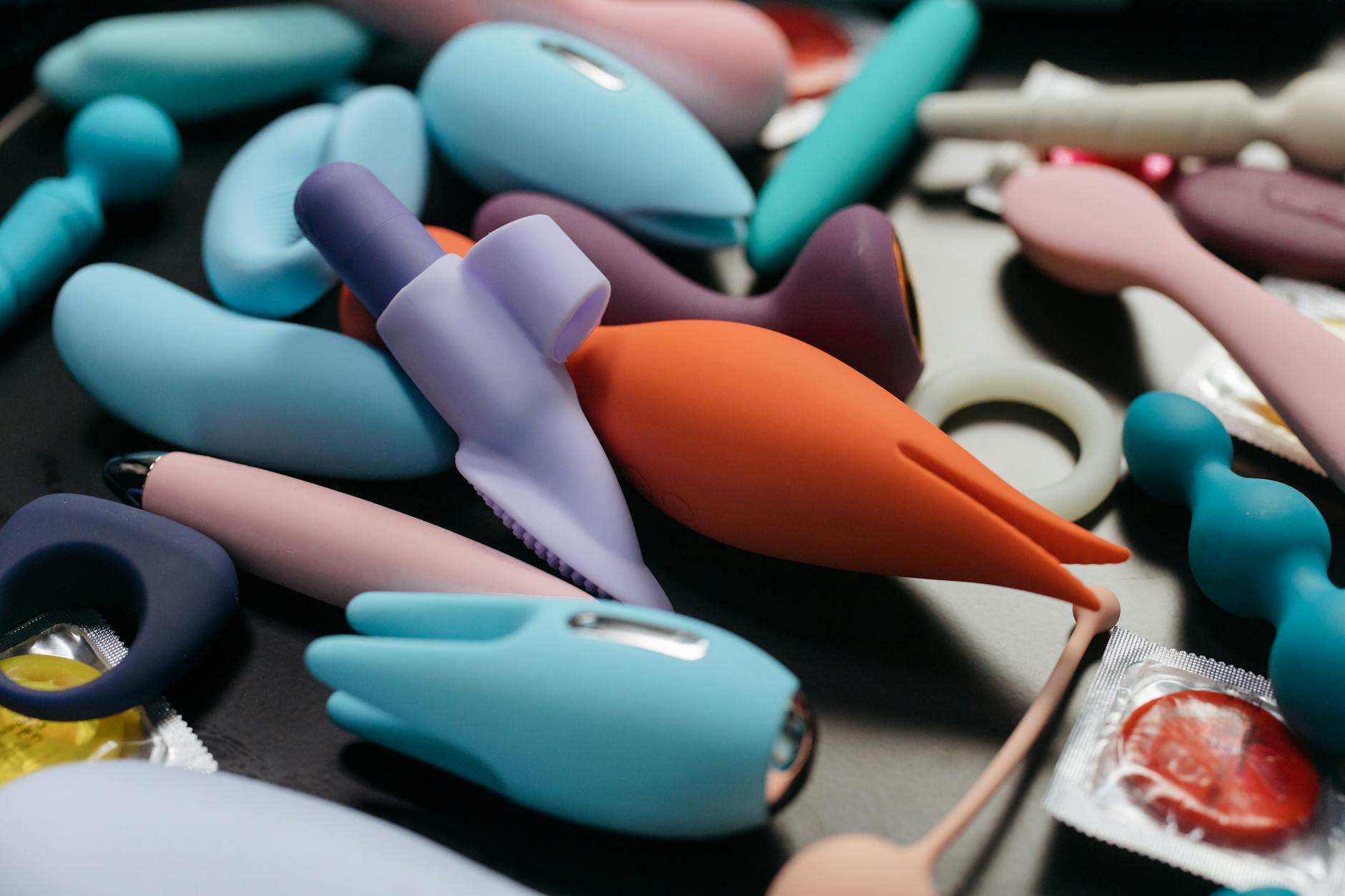
Photo by cottonbro studio on Pexels
What happens in the actual moment
Set a realistic timeline. Twenty to thirty minutes, not an hour. You're rebuilding tolerance for touch and presence, not chasing orgasm.
Start clothed or half-clothed. This sounds weird if you've been together for years, but the psychological distance is real. Undressing completely can feel too vulnerable too fast. Let your nervous system adjust in stages.
Warmup matters more than you'd think. Skin-to-skin contact, kissing, talking, touching without any goal except noticing sensation. After a gap, your arousal may take longer to build. This isn't dysfunction. It's just deactivation that needs time to reverse.
When you do introduce the toy, check in: "Does this feel okay?" Not "Does this feel good?" Okay is enough. Good can wait.
If sensation feels numb or distant, that's common after a gap. It doesn't mean anything is broken. Keep going gently. The nervous system recalibrates. This might take three sessions or ten. There's no timeline. "I felt a little more this time than last time" is massive progress.
If one partner gets emotional, that's also normal. The body remembers what touch means. You might cry. You might feel grief that you lost that time together. You might feel relief. None of these mean you should stop. They mean you're reconnecting to something important.
The most common obstacle (and how to handle it)
One partner gets into it and wants to keep going. The other shuts down because it suddenly feels like "real sex" and the vulnerability spikes. This happens in about 70% of the couples I work with who try this.
Here's the move: if one person needs to pause, you both pause. Not angrily. Not in a way that makes it a rejection. You're building back to this. If tonight is twenty minutes and it ends, that's a success. Don't push to the next level just because you're already here. The goal is "we did this together without falling apart," not "we finished."
On the flip side, if neither of you feels much, that's also fine. You're learning. The lemon vibrator is a conversation starter between your bodies. Some conversations take multiple sessions to develop.
How to know if you should keep going versus when to get help
If you try this four or five times over two to three weeks and one partner is completely withdrawn, that's a sign the gap goes deeper than just physical rust. It might be resentment. It might be that one person wants out and can't say it. It might be trauma or depression that needs individual attention first.
In those cases, a couples therapist isn't a failure. It's the smart move. Your job right now isn't to fix everything. It's to notice what's actually happening and respond honestly.
If you're both nervous but both willing, if you're making small progress, if you're talking about it afterward, you're already rebuilding. The lemon vibrator is just the tool. The thing that actually works is showing up together without an agenda.
After the gap is closed
Many couples I work with find that once they restart with a sex toy, they have easier access to each other afterward. The tool breaks the silence. After that, they might use it sometimes or not at all. The point is they're no longer frozen.
Your body will remember faster than your mind will believe it. Keep consistent. Weekly is better than monthly. Let it be weird. Let it be awkward. Let it be just okay. That's how you get back to good.
People also ask
What if one partner really doesn't want to restart sexual intimacy at all?
That's a different conversation entirely. If one person wants physical intimacy back and the other doesn't, the gap isn't just sexual. There's usually anger, loss of attraction, or a fundamental incompatibility about what the relationship should be. Before introducing any toy, that person needs to voice what they actually want. A therapist can help you both figure out if that's something you can bridge or if the relationship itself needs to shift.
How long should we wait before trying a lemon vibrator after a long gap?
There's no magic number. Some couples need one month of reconnection first. Others can jump in immediately if both people are genuinely willing. The real question is whether you're both nervous or whether one person is dreading it. If someone is dreading it, wait. Use that time to figure out why. If you're both nervous but interested, you can try sooner.
Can we use a clitoral vibrator if my partner has erectile dysfunction?
Absolutely. In fact, suction toys often work better for couples navigating ED because they shift focus away from penetration and erection, which are exactly where the pressure usually lives. You're exploring sensation instead of performance. Many partners find this actually helps reduce anxiety enough that other things improve too.
What if nothing happens? No orgasm, no real pleasure, just awkward silence?
That's real and pretty common. Your body might need more time. Your mind might need more permission. Or you might discover that you actually do want something different from the relationship now. Awkward silence is still communication. It's telling you something needs to shift, even if you're not sure what yet.
Should we tell anyone we're using a lemon vibrator to rebuild intimacy?
No. This is between you. Your sex life is not a therapist's business unless you're working with that therapist. Even close friends don't need to know. This is private, vulnerable work. Protect that space.
How do we know if this is actually working?
You don't need orgasms or fireworks. You just need to notice: Are you touching more? Are conversations easier? Do you feel less alone? Are you laughing together sometimes? Those are the real markers. The toy is just permission to start somewhere safe. The actual work is rebuilding trust in each other's bodies and presence.
The thing about gaps
They're not permanent. Your body hasn't forgotten how to feel pleasure. Your partner hasn't forgotten how to matter to you. You've just both learned to live without it, and that takes real skill to undo. A lemon vibrator or any clitoral toy is just a way of saying, "Let's remember this together, slowly, without pressure."
Start with conversation. Add the toy only when you're both genuinely curious. Keep going even when it's awkward. That's how you close the gap.
If you need support navigating the emotional side of this, reach out to a therapist who specializes in couples work. If you have other questions about pleasure, toys, or bodies, get in touch with Buy Lemon Sex Toy directly at /contact.