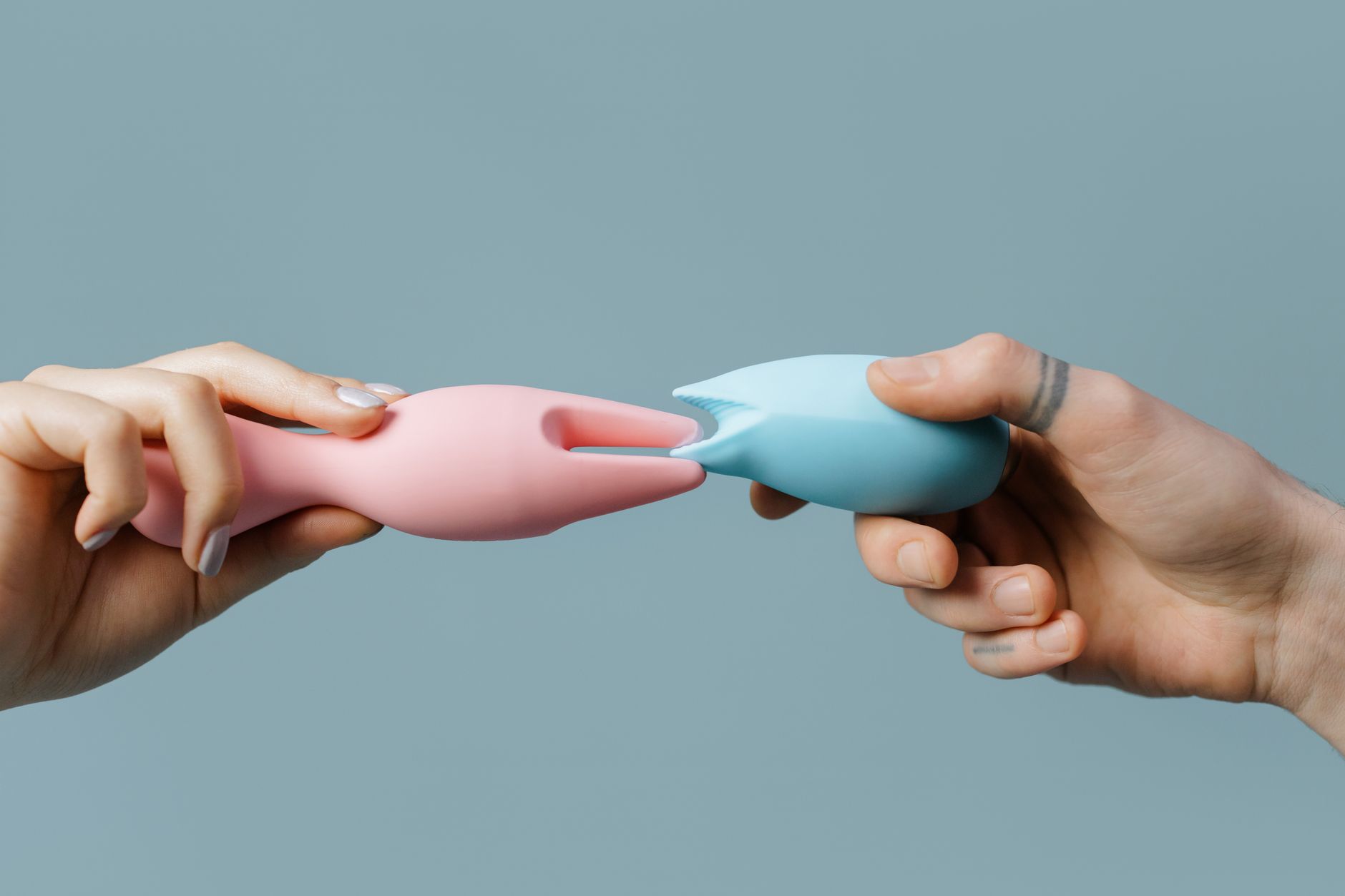
How to Use a Lemon Vibrator When You're Healing From Pelvic Floor Dysfunction
Let's be real. Pelvic floor dysfunction is isolating. You've been told to do Kegels, avoid certain activities, and wait. The conversation around pleasure during recovery is basically nonexistent, which means most people assume it's off the table entirely.
It's not. But it does require a completely different approach than you've probably used before.
I work with a lot of couples navigating this transition, and the couples who rebuild physical intimacy fastest are the ones who don't wait until they're "fully healed" to reconnect. They redefine what connection looks like during recovery. That's where a lemon vibrator comes in, not as a return to baseline, but as a bridge to reclaiming sensation on your own timeline.
What pelvic floor dysfunction actually does to sensation
Your pelvic floor is a hammock of muscles supporting your bladder, uterus, and bowel. When those muscles are too tight (hypertonic), too weak (hypotonic), or unstable, sensation gets scrambled. The feedback loop between your brain and your pelvic region gets noisy. Stimulation that used to feel amazing might feel sharp, or numb, or confusing.
Here's what's important: this is temporary. The nervous system learns fast, especially when you're patient with it.
Most people think pelvic floor physical therapy is about Kegels. It's not. It's about retraining the nervous system to recognize safe sensation again. A skilled pelvic floor PT teaches you to relax the muscles, identify where tension lives, and gradually restore communication between your brain and your body.
Now, pleasure during this process isn't reckless. It's actually part of the recovery if you approach it correctly.
The four things that change when you're using a lemon vibrator during healing
1. Start with external stimulation only. If pelvic floor dysfunction involves internal pain or tension, internal penetration is off the table for now. A lemon vibrator's suction design is perfect for this because it focuses entirely on the clitoris and external tissue. You get pleasure without triggering the muscles that are already struggling.
2. Use the lowest settings first. The Lem's gentlest modes (usually patterns 1 through 3) give you stimulation without intensity. Your nervous system needs time to recognize "this is pleasure, not pain." Low intensity + longer duration beats high intensity + short bursts during healing.
3. Build a longer warm-up window. Arousal takes longer when your pelvic floor is tight or weak because the natural feedback isn't flowing smoothly. Budget 20 to 30 minutes. Use that time to check in with your body, breathe, maybe use the lemon vibrator on the lowest setting without the goal of orgasm. The goal is sensation.
4. Coordinate with your pelvic floor PT's timeline. If your therapist says "no sexual activity for four weeks," that means no. If they say "you can try gentle external stimulation when it feels right," then a lemon vibrator is a reasonable next step. Don't guess. Ask.
How to actually use a lemon clitoral vibrator during recovery
Here's a real protocol I've recommended to clients:
Weeks 1-2 post-PT initiation: No vibration. Use the Lem on its lowest setting without turning it on, just as an external massage tool. You're teaching your nervous system that external touch is safe. A few minutes a day is enough.
Weeks 3-4: Turn on pattern 1 (usually the gentlest suction mode). Set a timer for 2 to 3 minutes maximum. The goal is not orgasm. The goal is "does this feel safe." If it feels sharp, burning, or makes you clench, stop. Clench indicates your pelvic floor is protecting itself from perceived threat. Not a judgment. Just information.
Weeks 5+: Increase to pattern 2, extend to 5 to 10 minutes. Focus on breathing. Shallow breathing during stimulation tells your nervous system something is wrong. Deep, slow breaths tell it something is good. Breathing is the volume dial.
When you reach pattern 3 or 4: You're probably ready for longer sessions, 15 to 20 minutes. If an orgasm comes, great. If it doesn't, also great. The nervous system is healing, and pleasure is the proof.
One thing I see frequently: women who've experienced pelvic floor dysfunction start using a lemon vibrator and immediately expect the intensity they had before. When that doesn't happen, they think they're broken. You're not. Your nervous system is asking you to slow down. Listen to it.
The role of a partner (if you have one) during your recovery
If you're in a relationship, this timeline changes slightly because you're coordinating two nervous systems, not one.
Most couples I work with skip straight to trying partnered sex again without rebuilding external pleasure first. That's a mistake. It puts pressure on you to perform and pressure on your partner to "get it right," which almost guarantees failure.
Here's what works better: use the lemon vibrator solo first, establish your own sensation map, then introduce your partner into the process. Maybe they're in the room while you use it. Maybe they hold you. Maybe they eventually use it on you. The order matters, but the key is that you're leading. You know what your body needs.
If your partner is feeling rejected or distant during your recovery, that's real and worth naming. This is a good moment to ask: "I need you to help me heal. That might look different than before, but it's not about you." Partners who understand they're part of the solution, not the problem, tend to stay curious and patient.
Why sensation might feel different (and that's fine)
Some people notice that orgasms feel flatter during pelvic floor dysfunction recovery. Others find they can't reach orgasm at all for a while, then suddenly can. Some discover they actually prefer gentler stimulation even after they're healed.
Your pelvic floor dysfunction is teaching you something about your body. Don't waste that knowledge by rushing back to exactly what you were doing before. The healed version of you might want something different.
A lemon vibrator's suction design is particularly good for post-recovery pleasure because it doesn't require the same internal muscle engagement that other vibrators do. You're getting clitoral pleasure without taxing the system you're rebuilding.
When to pause or adjust
If stimulation triggers sharp pain, increased urgency to urinate, or visible pelvic floor clenching, stop and report it to your PT. Pain during recovery is information, not a character flaw.
If you're using a lemon vibrator and noticing increased tension in your pelvic floor, you've found the intensity ceiling for this week. Drop back a pattern and extend the timeline.
If you're three months into using a lem vibrator during recovery and feeling genuinely anxious about it each time, that's worth discussing with your therapist. Sometimes healing involves somatic therapy or trauma work, not just physical exercises.
The mindset shift that actually helps
Pelvic floor dysfunction is a detour, not a destination. You're not healing from sex; you're healing so you can have sex again, on terms that feel good.
That's why I keep mentioning the Lem and lemon clitoral vibrators specifically: they're designed for people who need gentleness without sacrifice. The suction technology gives you real stimulation without the intensity that can trigger defensiveness in a healing pelvic floor.
Your body is not broken. Your pelvic floor is just asking you to slow down, pay attention, and rebuild trust with sensation. A lemon vibrator is a tool for exactly that conversation.
FAQs about lemon vibrators during pelvic floor dysfunction recovery
Can I use a lemon vibrator if my pelvic floor PT hasn't cleared me yet?
Not without checking first. Ask your therapist specifically about external vibration. Some protocols clear you for external pleasure earlier than others. Don't assume; confirm. Once you have clearance, start with the lowest settings and the shortest durations.
Will using a lemon vibrator slow my recovery?
No. If anything, gentle pleasure during healing can help your nervous system recognize that sensation is safe, which paradoxically helps muscles relax. The key word is gentle. High intensity or rushing the process can set you back.
What if I can't reach orgasm with the lemon vibrator like I used to?
That's completely normal during healing. Your nervous system is rewiring itself. Some people's orgasms come roaring back; others find they prefer a different kind of pleasure. Both are healing. Release the expectation and just notice what's happening. Orgasm will likely return, but it might look different, and that's not a loss.
Is it okay to use a lemon vibrator if I have internal pain but no external pain?
This requires PT guidance. Internal pain might mean internal stimulation is unsafe right now, but external lemon clitoral vibrator use could be fine. Some pain patterns need complete rest before any pleasure activity. Others benefit from external pleasure while internal healing happens. Your PT can tell you.
Can my partner use a lemon vibrator on me during recovery, or should I stick to solo use?
Solo use first establishes trust with your own body. Once you're comfortable, a partner can absolutely use a lemon vibrator on you. Having a partner in control sometimes feels riskier to a healing nervous system because you can't control the intensity or timing. Manage that by giving clear feedback and starting with them on the lowest settings.
What if using a lemon vibrator brings back pain I thought was resolved?
Stop, breathe, and don't panic. Report it to your PT. Sometimes healing isn't linear. A flare-up doesn't mean you've broken anything; it might mean you hit intensity too fast. Back off the settings, extend the timeline, and check in with your PT about what the pain is telling you.
Your recovery, your timeline, your pleasure
Pelvic floor dysfunction is lonely because nobody talks about the pleasure part of healing. We talk about exercises and elimination diets, but not about how to feel good in your body again, step by step.
A lemon vibrator, used thoughtfully, is one tool for rebuilding that conversation. Start slowly, listen to your body, stay coordinated with your PT, and let sensation return at its own pace. Your healed self is still in there. You're just taking the long way around to her.
If you have questions about reintroducing pleasure into your healing journey, or if you'd like to talk through what recovery looks like in your specific relationship, reach out. That's what I'm here for.