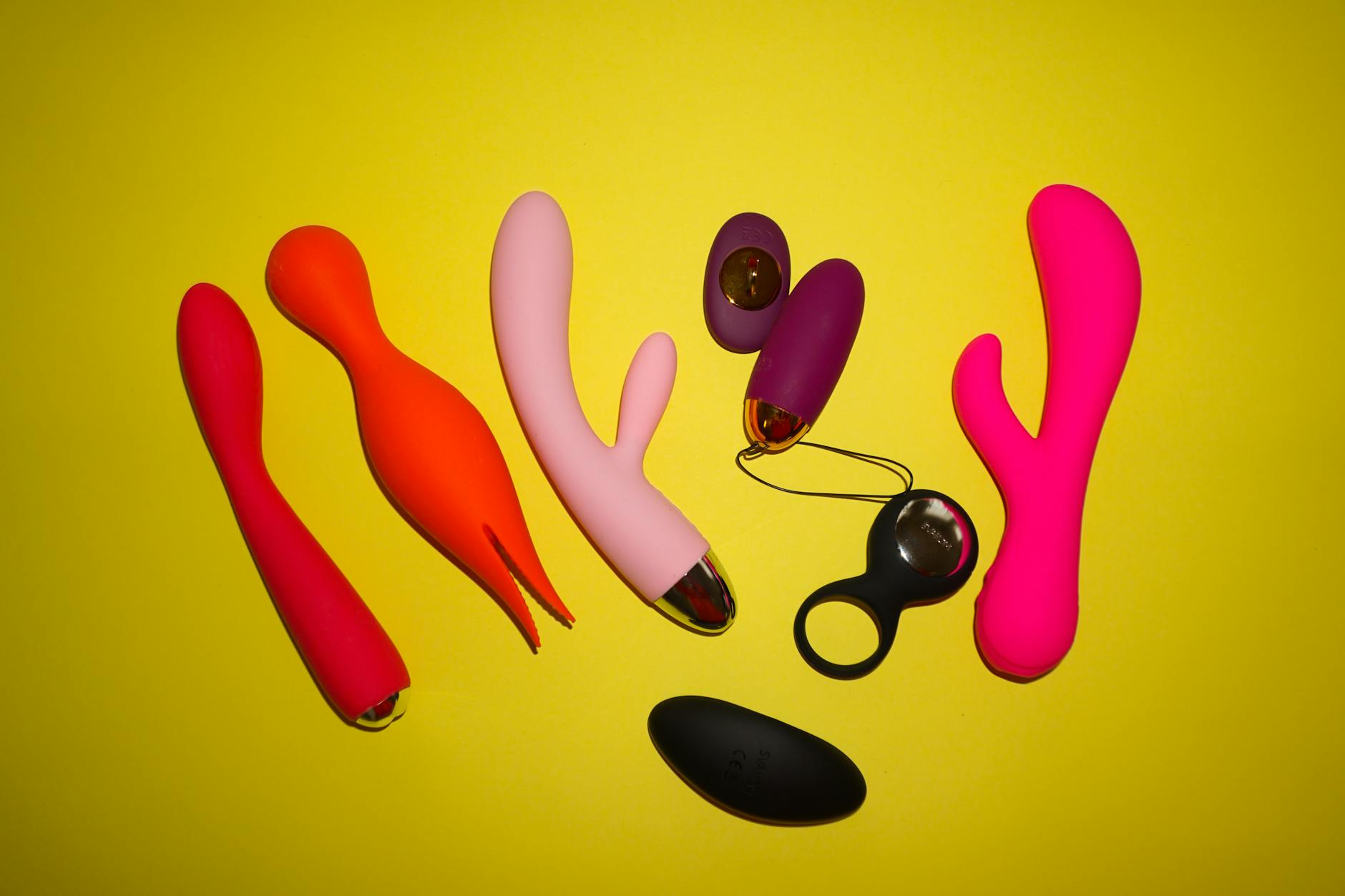
Here's the thing about performance anxiety
It's not really about performance. It's about fear. Your partner's brain has locked onto "I have to be able to do this" and when the body doesn't cooperate, shame arrives right behind it. Shame kills everything. Intimacy, trust, desire, the lot.
The irony is that the harder he tries to fix it, the worse it gets. Erectile dysfunction (ED) tied to anxiety is a vicious loop. Pressure creates tension, tension prevents blood flow, no blood flow means nothing happens, which confirms the fear. Repeat.
What stops the loop is removing the pressure entirely. And that's exactly what a lemon clitoral vibrator does.
Why lemon vibrators work when performance is the issue
Here's the reframe that matters. A lemon vibrator doesn't replace him. It redirects the entire architecture of what sex is supposed to feel like in that moment.
Most partnered sex built around penetration puts all the stakes on one thing. If that one thing isn't working, the whole encounter feels like a failure. Both of you feel it. He feels it more.
A lemon clitoral vibrator removes penetration from being the main event. Suddenly, pleasure doesn't depend on his body performing a specific way. It depends on touch, attention, and sensation. Those aren't audience events. They're intimate moments. The pressure evaporates.
This isn't a workaround. This is how sex actually works better for a lot of couples long-term. Many people with vulvas don't orgasm from penetration alone anyway. Using a lem vibrator acknowledges that fact and builds the entire encounter around it.
Your partner's brain gets to relax. His nervous system downshifts from performance mode to connection mode. And that shift is often enough to let his body work the way it wants to.
The conversation you need to have first
Don't just pull out a lemon vibrator and hope he understands it's not a comment on him.
Have this conversation when you're not about to have sex. Sit down, preferably clothed, and name what's happening. Something like: "I've noticed sex feels stressful for you lately, and I don't want that. I want us to feel good together. I want to try something that takes the pressure off both of us."
Then show him the vibrator. Let him hold it. Explain what it does (it's not replacing him, it's adding something that feels good for you). Tell him the specific way it'll change things: "Instead of focusing on penetration, we can focus on making me feel amazing. You're still here, still touching me, still inside this with me. It just shifts where the attention goes."
If he's resistant, don't push. But do name the resistance. "Are you worried this means something about you?" Often he'll say yes. Then you can say directly: "It doesn't. This is about me getting what feels good. And honestly, watching you focus on making me feel amazing is way sexier to me than anything else."
That last part isn't a lie to make him feel better. For many people, it's true. Being desired and watched while you orgasm is a completely different experience.
How to actually use it together
Start with foreplay that would happen anyway. Make out. Touch. Get into it. Don't bring the vibrator out too early, or it feels clinical.
Once you're both engaged and your body's ready, you introduce it. Hand it to him. "Want to try it?" He can hold it, control the pattern, watch your reaction. This keeps him involved. He's not sitting on the sidelines.
If he's uncomfortable controlling it, you control it and he stays close. He can touch you in other ways. Kiss you. Be inside you without the pressure to stay hard or perform. His hands on your waist or thighs. His mouth on your neck. He's still very much present and wanted.
The lemon clitoral vibrator does the technical work. His job becomes attention and presence. Most people find that shift incredibly satisfying.
What patterns work when anxiety is high
Start low. Patterns 1 or 2 on the lem vibrator. High intensity can feel too much when you're both already in your heads.
Slow is better than fast. Let sensation build. If he's struggling with arousal, slower touch everywhere helps his nervous system relax. Rush, and you're working against biology.
Stay in the moment. No checking in every five seconds (that adds more pressure). But occasional eye contact, a smile, a "this feels good" keeps the connection alive without making it about whether anything specific is happening.
If he loses an erection mid-act, don't panic and don't acknowledge it like it's a problem. Just keep going. You're not dependent on it. The vibrator doesn't care. Neither should the moment. Sometimes erections come and go, especially when anxiety is part of the picture. That's normal. It's only a problem if you both decide it is.
Beyond the bedroom moment
Performance anxiety doesn't live only during sex. It lives in his head before sex, after sex, in the shower, at work the next day.
If this is a persistent pattern, therapy helps. A sex therapist or couples counselor trained in ED can teach both of you what's actually happening neurologically and psychologically. It's not a character flaw. It's a treatable pattern.
Some men benefit from talking to their doctor. Sometimes there's a physical component (blood pressure medication, for example, can affect function). Sometimes medication like sildenafil bridges the gap while he rebuilds confidence.
But the biggest shift happens when you both agree that penetration isn't the only way to have a good sexual encounter. Once he knows that, once it's not the measure of success, a lot of the anxiety dissolves on its own.
The deeper work: rebuilding trust in his own body
Performance anxiety often shows up after an incident. A time it didn't work. Maybe stress or alcohol or just a random night. His brain made a story out of it: "I failed." Now he's waiting for it to happen again.
Your job isn't to reassure him constantly (that actually reinforces the anxiety, because reassurance means there's something to be anxious about). Your job is to show him through action that you're not waiting for him to fail. You're present. You're having pleasure. You're not keeping score.
Using a lemon vibrator together proves that. It proves that good sex isn't a performance evaluation. It's two people making each other feel good in whatever way works.
Over time, as he sees that sex can be successful without him doing one specific thing perfectly, his nervous system rewires. The fear releases. And eventually, his body often starts working the way it did before the anxiety took hold.
What if nothing changes?
If after a few months of trying this together, the anxiety hasn't lifted, it might be time to talk to a professional. A sex therapist or couples counselor who understands that performance anxiety is a real neurological pattern, not a character defect, can help both of you move forward.
Some relationships need that extra support. It doesn't mean anything is wrong with you or him. It means you're both committed enough to get help.
In the meantime, a lemon vibrator gives you both permission to stop measuring success by one metric. That permission alone can shift everything.
Frequently asked questions
Does using a vibrator make him feel inadequate?
Only if you frame it that way. If you introduce it as "I want you to try this with me because it makes me feel amazing," that's additive. You're not replacing pleasure, you're expanding it. The difference in how he receives that is enormous. Read the moment, and if he seems hesitant, have that conversation beforehand about what it actually means.
What if he won't even try it?
That's important information. Resistance sometimes points to shame, sometimes to control, sometimes to past experiences. Ask him what he's actually worried about. Don't let him say "I don't know." Dig a little. "Is it that you feel like you're not enough? Is it about feeling left out? Is it about what it means if you can't do it yourself?" Once you know what story he's telling, you can address the real thing.
Can we use it if I also have anxiety about sex?
Absolutely. In fact, if both of you are carrying tension, a lemon vibrator can help you both relax into sensation together. You get to experience pleasure without performance, and so does he. Sometimes shared pleasure is the thing that heals mutual anxiety.
Should we use lube with it?
Yes. Water-based lube makes everything feel better and reduces friction on sensitive skin. Silicone-based lubes can damage silicone toys, so stick with water-based. A little goes a long way.
Is it normal for sensation to come and go during sex?
Completely. Arousal isn't linear. Bodies have rhythms. If he loses sensation or firmness and then regains it, that's not a failure. It's just how bodies work sometimes, especially when they're carrying stress or anxiety. The more casual you both are about it, the less it becomes a thing.
What if we use a lemon vibrator and he still can't get or stay hard?
Then it might be worth seeing a doctor to rule out anything physical. But also, remember you don't actually need penetration to have great sex. If you're both feeling good and connected, and orgasm is happening, that's successful. Redefining what counts as "working" is half the battle with performance anxiety.