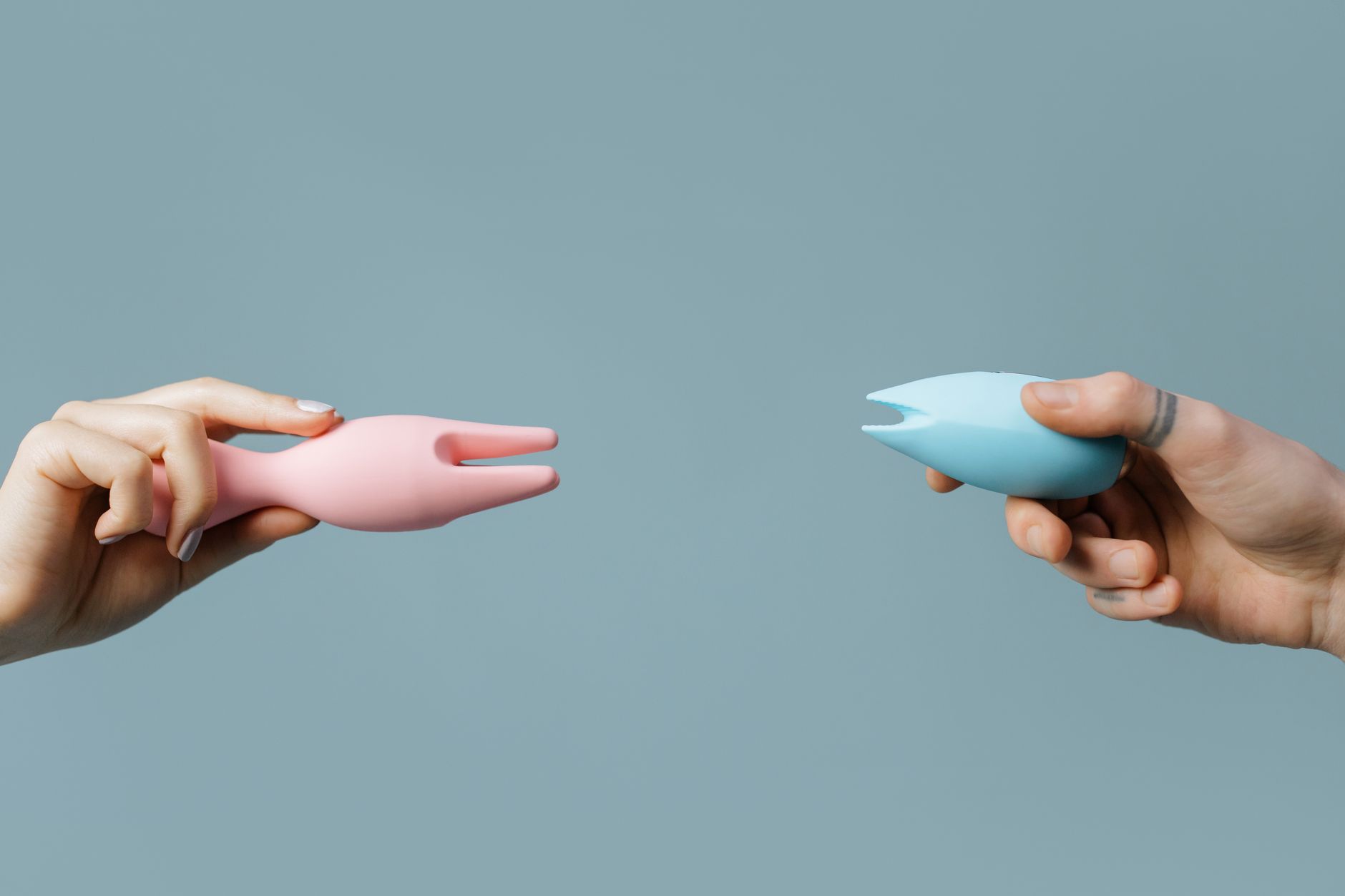
How to Use a Lemon Vibrator When You Have a High Sex Drive After 40
Let's be real: the narrative around female sexuality after 40 is nonsense. You're supposed to be winding down, losing interest, settling into comfort. Except a lot of people don't. Your drive might be higher now than it was at 25. And that's not a problem to solve. It's a fact to work with.
A high libido after 40 often means you know what you want, you're not apologizing for it, and you have the confidence to ask for it. That's powerful. It's also a shift that surprises many people, especially those in long-term relationships where partners might not be on the same frequency.
This is where a lemon clitoral vibrator becomes less of a novelty and more of a legitimate tool for managing desire, sustaining pleasure, and honestly, preserving your relationship if your partner's libido doesn't match.
Why desire actually peaks for many people after 40
Here's the counterintuitive part: testosterone doesn't drop off a cliff at 40 the way estrogen does during menopause. In many women, it stays relatively stable through the 40s and into the 50s. That baseline hormone supports desire, arousal speed, and orgasmic intensity.
Add to that the psychological shift. By 40, many people have shed the shame, the performance anxiety, the need to be "sexy" for someone else. You've likely had enough partners to know what you like. You're done performing for validation. That mental clarity alone turbocharges pleasure.
Clinically, I see this pattern constantly: clients report their strongest orgasms happen in their 40s and early 50s. Not because their bodies changed in a better way, but because their minds finally got out of the way.
The complication is frequency. If you want sex three, four, or five times a week and your partner wants it once a week, or if you're single and managing solo desire on top of work and life, the friction becomes real.
The problem with raw frequency without tools
If you're relying on penetration or hand stimulation alone to manage a high drive, you run into biomechanical problems fast. Friction irritates tissue. Your hands get tired. Penetration can feel repetitive. You either suppress the desire (bad for mood, worse for resentment) or you burn out your body and your partner.
A lemon vibrator solves this elegantly. It delivers intense, sustained stimulation without the wear-and-tear of manual friction. A single clitoral orgasm with a tool takes 5 to 15 minutes and leaves you satisfied. That's efficient. That's sustainable.
How to use a lemon clitoral vibrator for managing high desire
Start with pattern and intensity calibration. A lemon vibrator has multiple settings. Don't jump to the highest intensity. Start at pattern two or three. You're training your nervous system to respond to the sensation without numbing yourself out. Use lower intensity for your first solo session of the day, save higher patterns for later if you want a second experience.
Schedule solo sessions, seriously. If you have a partner with lower libido, solo time with a lemon clitoral vibrator isn't a substitute for partnered sex. It's a complement that prevents resentment. Many couples report that when the higher-desire partner has regular solo access to pleasure, the lower-desire partner stops feeling pressured, which often paradoxically increases their interest in partnered sex. Removing the pressure of "meeting a quota" makes sex fun again instead of a performance.
Use it as foreplay accelerator with a partner. A high sex drive often means you want more frequent sex, but it can also mean you want sex faster. A lemon sucker gets you aroused and ready in five minutes instead of twenty. You can have a quickie with your partner, then separate for solo time if needed. This keeps both partners happy without either one compromising their authentic frequency.
Vary the patterns throughout the week. Your clitoris responds to novelty. If you use the same pattern every time, sensation blunts. Rotate between suction, pulsation, and steady vibration. Use different speeds on different days. Your body stays responsive because it's not habituating to one single input.
Managing the mental side of a high drive
Desire that peaks after 40 sometimes comes with guilt, especially if you were raised to believe that sexual appetite in women is unseemly. Or resentment, if your partner can't or won't match your frequency. Or anxiety about being "too much."
None of that is useful. Your drive is a normal biological reality. It's not greedy. It's not a problem. It's a feature.
The reframe: a high libido is information about what your body needs to feel good. A lemon vibrator gives you autonomy to meet that need without waiting for someone else's availability, without guilt, without suppression.
If you're in a partnership, the conversation to have is not "why don't you want sex as much as I do?" but "how do we both get our needs met?" Sometimes that's more frequent partnered sex. Sometimes it's a mix of solo and partnered. Sometimes it's accepting that you have different frequencies and that's okay as long as both people have agency.
The practicality question: frequency ceiling
There's a real question: can you use a lemon vibrator too often? The honest answer is no, not in the way you might be worried. You won't "wear out" your clitoris. Orgasm doesn't have a daily limit. Some people come once a day. Some come five times a day. Both are fine.
What does matter is tissue health. If you're using the vibrator daily at maximum intensity, you might experience temporary numbness or desensitization. This isn't permanent. It reverses in days to a week of lower intensity or rest. But if you're managing a high drive, you probably want to avoid that fluctuation.
The practical rhythm for most people with high desire: use your lemon vibrator four to five times a week, mixing solo sessions with partnered sex, alternating intensity levels. This keeps you satisfied without creating any sensory fatigue.
When a partner resists and why communication helps
Sometimes introducing a lemon vibrator into a relationship triggers insecurity in the lower-desire partner. "Does she not need me?" or "Am I not enough?" Both are misreadings of what's actually happening.
What helps: frame it as addition, not replacement. Your vibrator isn't competing with your partner. It's making you happier, which makes you more present, more affectionate, less resentful. A satisfied partner is a better partner. Full stop.
If your partner struggles with this, the conversation to have isn't about the vibrator. It's about what security looks like in your relationship. Sometimes that means reassurance. Sometimes it means professional support. But the vibrator itself isn't the issue. It's a symptom. The real conversation is about mismatch, and that needs words, not avoidance.
The solo pathway: owning desire without apology
If you're single with a high drive, using lemon clitoral vibrators is straightforward. No negotiation. No guilt. Just honest pleasure on your own terms. Some people with high desire prefer this entirely. Some people use solo time as a reset between relationships. There's no rule. Your body, your choice, your frequency.
A high sex drive after 40 isn't a problem to manage. It's an advantage to claim.
You have confidence, self-knowledge, and permission to prioritize your pleasure. A lemon vibrator is the physical tool that makes that possible.
Practical storage and discretion
If discretion matters for you, store your vibrator in a bedside drawer or bathroom cabinet away from casual view. The lemon clitoral vibrator is compact enough that it's genuinely subtle. Charging is USB, so it blends in with other electronics. If you share a home and privacy is limited, a small lockable box works. The point is: you deserve comfort and privacy around your own pleasure, regardless of your family situation.
When to troubleshoot sensation
If you're using a lemon vibrator regularly and sensation starts to feel muted, the fix is usually rest plus pattern rotation. Take three to four days off. When you resume, start with medium intensity and different patterns than your usual. Sensation will bounce back.
If numbness persists beyond a week, lower your overall intensity for a few sessions. You're not damaged. You're just habituated to strong stimulation. Pull back and let sensitivity rebuild naturally.
If pain appears, stop and check the toy for damage or irritation. If pain continues even with different toys, that's clinical information worth discussing with a gynecologist. But in most cases of high-frequency use, occasional dullness is just normal adaptation.
FAQ: High Drive and Lemon Vibrators
How often can I safely use a lemon clitoral vibrator if I have a high sex drive?
Daily use is safe for most people. Tissue doesn't get "worn out." What matters is intensity and pattern rotation. If you use maximum settings every single day, you might experience temporary desensitization. Mixing intensities and taking one or two days off weekly prevents this. Think of it like exercise. You can work out daily, but varying intensity and movement prevents burnout.
Will using a vibrator decrease my desire for partnered sex?
No. The opposite often happens. When you satisfy your own high drive regularly, you stop bringing desperation or resentment into partnered sex. You're calmer, more present, less transactional. Partners often report increased intimacy when the higher-desire partner has solo outlets for pleasure.
What if my partner feels threatened by my vibrator use?
Start with direct conversation. Say: "This isn't about you. This is about me managing my own body's needs." If your partner needs more reassurance, offer to use it together sometimes, or explicitly invite them into your solo sessions. Many couples find that watching or being present shifts the dynamic from threatening to bonding. But ultimately, your pleasure is non-negotiable. A partner who demands you suppress your sexual needs is asking you to abandon yourself. That's worth addressing, either through communication or through professional help.
Can a lemon vibrator replace partnered sex if my partner has low desire?
It can supplement. It cannot replace the intimacy of partnered sex. If you have mismatched desire, a vibrator buys you breathing room and prevents resentment. But the actual conversation about mismatch still needs to happen. Maybe your partner's desire increases over time. Maybe you reach a compromise around frequency. Maybe you decide the mismatch is incompatible. But the vibrator isn't a substitute for that conversation. It's a bridge while you're having it.
Is it normal for my sex drive to be higher in my 40s than it was in my 20s?
Completely normal. Testosterone remains stable through your 40s. Confidence and self-knowledge surge. Many people report the best sex of their lives in their 40s and 50s. Culture doesn't talk about this because it contradicts the narrative that female sexuality declines with age. But clinically, it's consistent. Your body isn't peaking sexually. Your mind is.
Should I tell my partner about solo sessions with a vibrator?
That depends on your relationship. In healthy partnerships with good communication, yes, honesty is usually better. It removes secrecy and prevents discovery that feels like betrayal. In some relationships, you might have an agreement about privacy around solo pleasure. What matters is that you're not hiding something that, if discovered, would damage trust. If you'd be ashamed for your partner to know, that's worth examining. You shouldn't have to hide your own pleasure.
The bottom line
A high sex drive after 40 is a gift, not a problem. It's proof that your body still knows how to want, to feel, to peak. A lemon clitoral vibrator is a practical tool that lets you honor that drive without friction, resentment, or compromise.
Use it solo when you need to. Use it with a partner when that feels good. Vary your patterns, rotate your intensity, listen to what your body tells you. And stop apologizing for wanting pleasure. You've earned it.
If you're navigating this with a partner and the conversation feels stuck, reaching out for support can help. Sometimes an outside perspective on desire mismatch makes the whole dynamic shift.
Your pleasure matters. Own it.