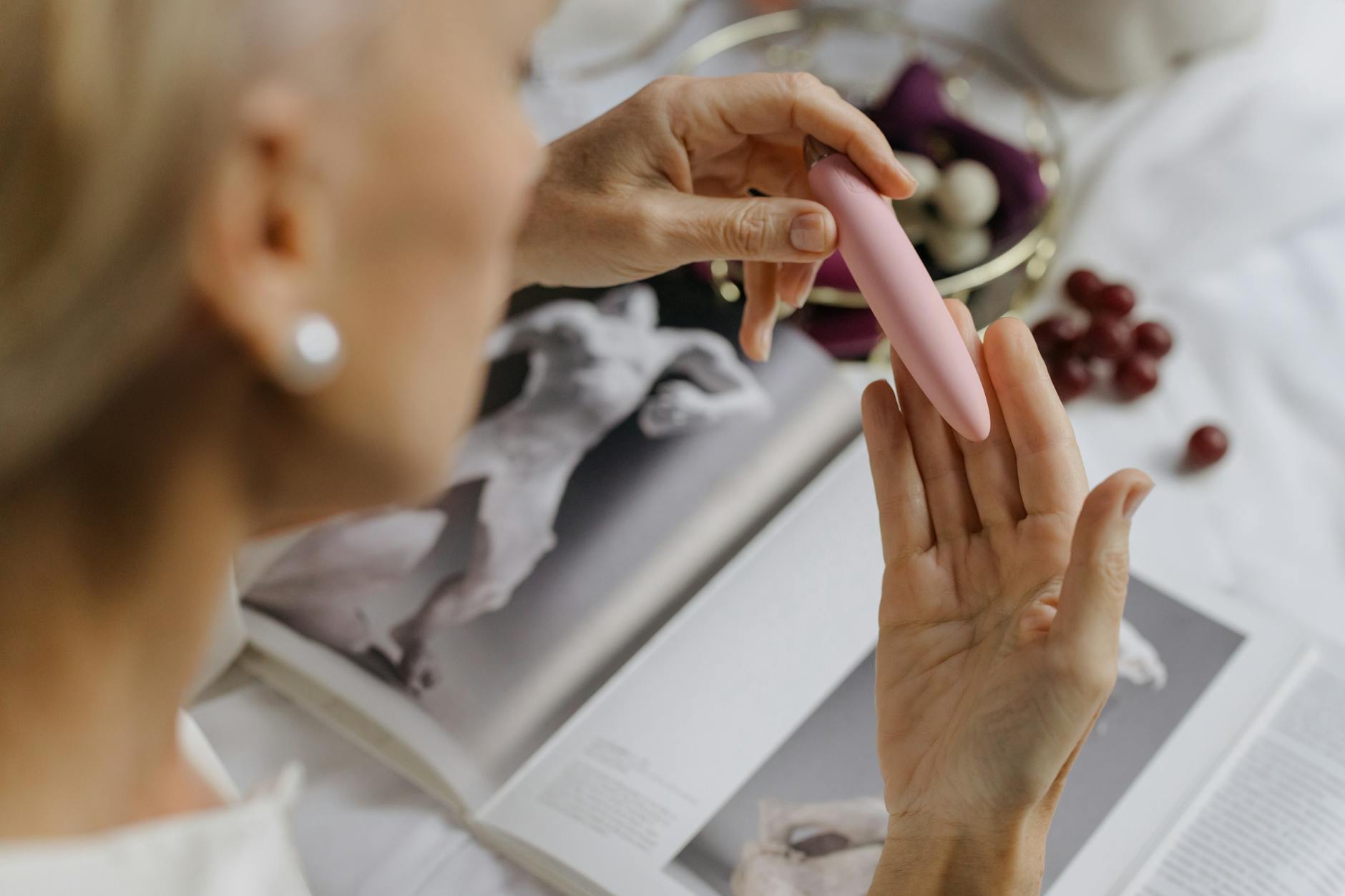
Let's talk about what actually changes after 60
Honestly, the conversation around aging and pleasure is either oversold as doom or undersold as "it's all the same." Neither is true. After 60, sensation genuinely does shift. But I've worked with hundreds of couples navigating this, and what I've seen repeatedly is that people who lean into the shift often find their best experiences yet.
Here's the physiological reality: collagen decreases, which thins skin. Nerve sensitivity changes, particularly in the clitoris and vulva. Blood flow can take longer to reach these areas during arousal. Hormonal fluctuations, especially if you've been post-menopausal for years, affect how your body responds. These are measurable, real changes.
What doesn't change: your brain's wiring for pleasure, your capacity for orgasm, or your right to prioritize your own satisfaction.
Why vibration alone stops working as well
Most people assume that if something felt good at 40, the same intensity should feel good at 60. That's not how aging works with sensation. Your nervous system doesn't respond to direct vibration the same way it did. The threshold for "background noise" versus "actual signal" shifts higher.
This is where most people give up. They try a standard vibrator, find it doesn't deliver the same spark, and conclude they've lost the capacity for good orgasms. They haven't. They've just outgrown a tool.
Clitoral suction works differently. Instead of relying on direct vibration penetrating thinned tissue, it uses gentle pulsing air pressure to stimulate the entire clitoral network. For people over 60, this approach tends to work better because it:
- Doesn't require thinner tissue to tolerate aggressive friction
- Engages a broader area of nerve endings rather than concentrating pressure in one spot
- Builds arousal more gradually and often leads to deeper, more intense orgasms
- Feels less like stimulation and more like a chain reaction in your body
A lemon clitoral vibrator uses suction technology, which is why so many people over 60 report that it's the first device in years that's delivered actual pleasure, not just sensation.
The warm-up window has actually expanded
One of the unexpected bonuses of aging is that the rush disappears. Your body isn't trying to prove anything anymore. That means arousal might take longer to build, but when it does, it's usually deeper and more textured than quick arousal ever was.
I recommend budgeting 20 to 35 minutes for the full experience. This isn't a downside. It's a feature. You get to linger in anticipation, which is pleasurable in its own right.
Start slow with your lemon vibrator. Use pattern 1 or 2 if you're new to it. The tool does most of the work, so your job is to stay present and notice what builds, not to chase intensity. Many people over 60 tell me they've discovered orgasms feel better when they're not rushing toward them.
Lubrication is non-negotiable now
After 60, natural lubrication often doesn't arrive on its own schedule anymore. This isn't a sign of low desire. It's just biology. The tissue is producing less of its own moisture, and that's completely normal.
Use a water-based lubricant every single time. Not sparingly. Generously. Apply it to yourself and to the tip of your lemon vibrator. This does three things: it protects thinner tissue from micro-tears, it improves glide and sensation, and it actually makes the suction mechanism work better.
If you notice any friction or discomfort, add more lube. This isn't a failure mode. It's how you take care of your body at this stage. Some people worry it feels artificial. After one or two sessions, it stops feeling like anything except right.
Why pelvic floor attention matters even more now
Your pelvic floor has been working hard for 60 years. By now, it's often tight, which can actually reduce sensation. Kegels are useful, but the overlooked half is learning to fully release the pelvic floor, not just clench it.
Before you use your lemon vibrator, spend 30 seconds breathing into your pelvic floor. Imagine it softening, opening. A simple practice is to inhale for four counts, then exhale for six counts, visualizing your pelvic floor relaxing on each exhale.
When the pelvic floor is tense, it limits sensation. When it's relaxed, the same stimulus feels dramatically more intense. This is often the missing piece for people over 60 who've felt numb for years.
Managing medication and sensation changes
If you're taking blood pressure medication, SSRIs, or other drugs that affect circulation or sensation, talk to your doctor about timing. Some medications work better for pleasure if you plan around them, not because you need to medicate differently, but because your body's chemistry has its own rhythm.
SSRIs in particular can flatten sensation. That's a known side effect. If that's happening, you're not broken. But suction-based stimulation often bypasses this issue better than vibration does because it's working on a different neural pathway.
Solo exploration before partnered play
Honestly, I recommend spending time alone with your lemon vibrator first, especially if it's new to you. Solo sessions take the pressure off. You're not performing for anyone. You're not managing someone else's response. You're just experimenting with your own body.
Most people over 60 benefit from understanding how their body responds now before they bring a partner into it. Use it a few times solo. Notice which patterns feel best, which positions are comfortable, how long warm-up usually takes. Then you can guide your partner or have a conversation about what you've discovered.
When to bring a partner in
If you have a partner, this is a conversation, not a surprise. Something like: "I've been exploring a new tool that's working really well for me. I'd love for you to be part of this" is plenty. Most partners are relieved to have a pathway back to pleasure after years of it feeling uncertain.
A lemon vibrator can be used solo during partnered sex. It can also be part of foreplay. The key is communication about timing, comfort, and what you want from the experience.
Rebuilding confidence around sensation
Most people over 60 who've experienced numbness or difficulty with orgasm have internalized it as permanent. They haven't. Their nervous system has adapted to a different input, and they just needed a different tool.
I've seen people weep the first time they have a strong orgasm after years of thinking that part of their life was over. It usually happens because they stopped forcing the old way and found a new way that actually matched their body now.
FAQs: What people over 60 actually want to know
Is it normal for orgasms to feel different after 60?
Completely normal. Orgasms after 60 often feel different because nerve sensitivity shifts, blood flow patterns change, and your pelvic floor has less elasticity. But "different" doesn't mean worse. Many people report stronger orgasms later in life because they're no longer performing for anyone else. The intensity builds differently, not less.
Will a lemon clitoral vibrator work if I've been numb for years?
Likely yes, especially if the numbness is from medication, hormonal changes, or aging nerve sensitivity. Suction-based stimulation uses a different mechanism than traditional vibrators. It tends to work when other tools don't. Start with the lowest settings and give it a few sessions before deciding. Your nerves might just need a different signal.
How do I know which lemon vibrator setting to use at my age?
Start at pattern 1 and work up. Most people over 60 get better results from patterns 1 through 3 than jumping to high intensity. The lower patterns are designed to build arousal gradually rather than overwhelm the tissue. After 20 to 30 minutes on a lower setting, you often reach a deeper intensity than you would with high vibration.
Can I use a lemon vibrator if I'm on hormone therapy?
Yes. Hormone therapy actually can improve sensation because it increases blood flow and tissue thickness. If you're on HRT and using a lemon vibrator, you might notice improved response over the first few months as your tissue rebuilds. Same principle applies if you're using topical estrogen cream. Both work well with suction-based devices.
What if lube makes me feel self-conscious?
That's a conditioning thing, not a real problem. Here's the reframe: lubrication at 60 isn't a sign something is wrong. It's a sign you're taking care of yourself. Professional athletes use gear. Your body at this age uses lube. Both are investments in better performance and less injury. After a few times, it becomes normal.
Is it okay to use a lemon vibrator every day?
Yes. Daily use won't desensitize you; actually, it often improves sensation over time because you're regularly stimulating the nerve endings. Some people use it daily as part of their self-care routine. Others use it a few times a week. There's no wrong frequency. Listen to your body.
The shift is real, but so is the pleasure
I work with couples where one or both people are over 60. The ones who thrive aren't the ones who pretend nothing changed. They're the ones who looked at what changed and said, "Okay, so what works now?" A lemon vibrator is one answer. Lubrication is another. Longer warm-up time is another. None of these are Band-Aids on dysfunction. They're just tools that match your body as it is right now.
Your pleasure matters at 60, at 70, at 80. Not as nostalgia for what it was. As a real, current part of your life. If sensation has faded, it's not because you've lost capacity. It's because the old tools don't match the new input requirements. Swap them out, and often what people discover is that the best is actually still ahead.